

Inverclyde’s Legacies of Slavery and Empire

We're delighted to have been granted funding by the National Lottery Heritage Fund for our Inverclyde's Legacies of Slavery project. This 2-year project will involve 1) developing a storybook and holding a night at the museum among the world collections with care experienced young people (in partnership with Proud2Care, Magic Torch Comics, and Inverclyde Council), food heritage volunteer workshops and recipe development (in partnership with Empower Women for Change and the Trust Zero Waste Community Pantry), creating a heritage trail (with volunteers, local walking and cycling groups and Inverclyde Council)and holding a remembrance event (including Inverclyde Voices singing spirituals sung in Greenock by the Jubilee Fisk Singers, guided walks, storytelling, performances and more, all in relation to the legacies of enslavement locally. This project aims to address Inverclyde’s involvement in the transatlantic trade of enslaved people, in light of the Black Lives Matter movement and recent moves to decolonise Scotland’s heritage.
We'll be announcing more details, events and volunteering opportunities soon.

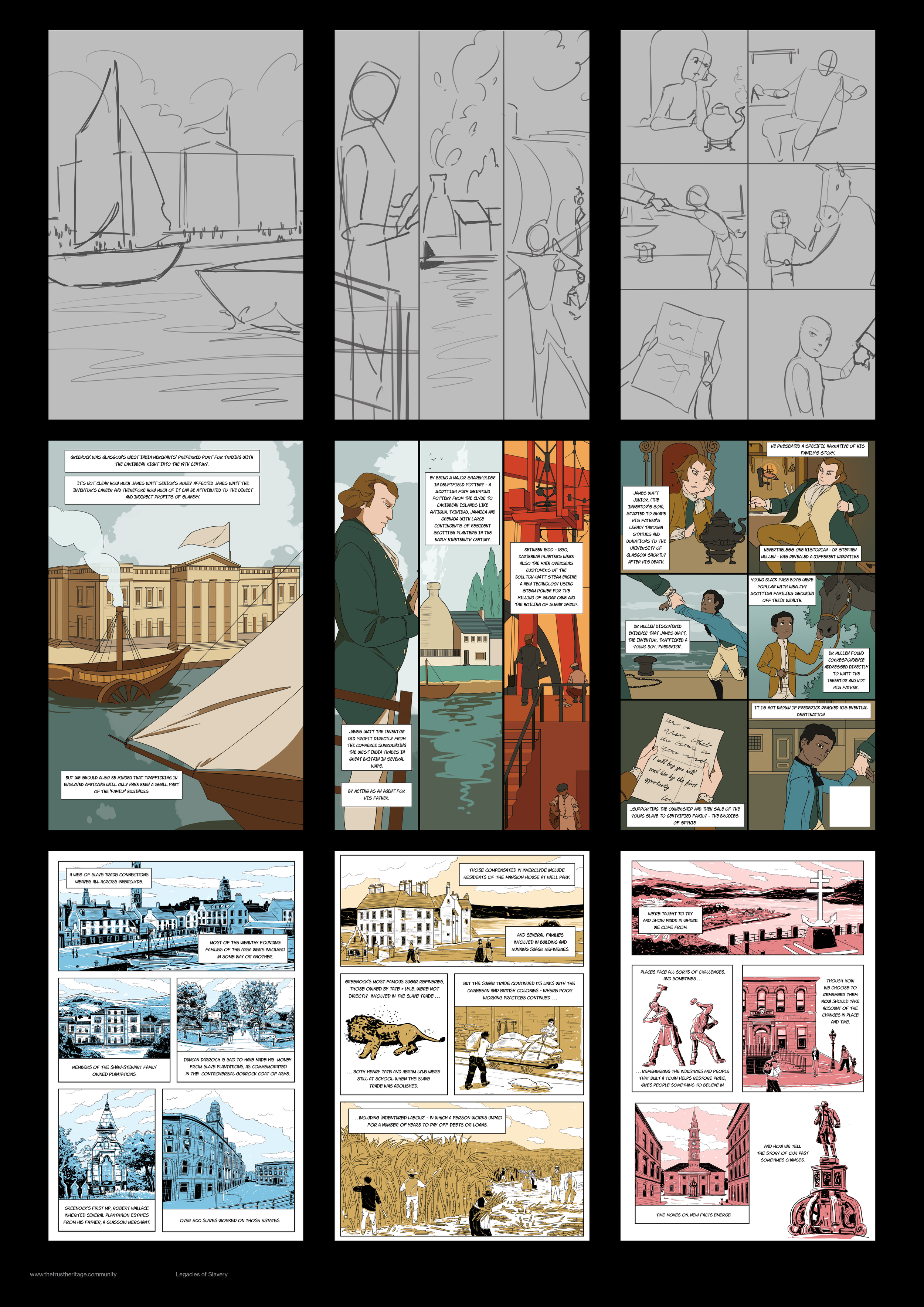
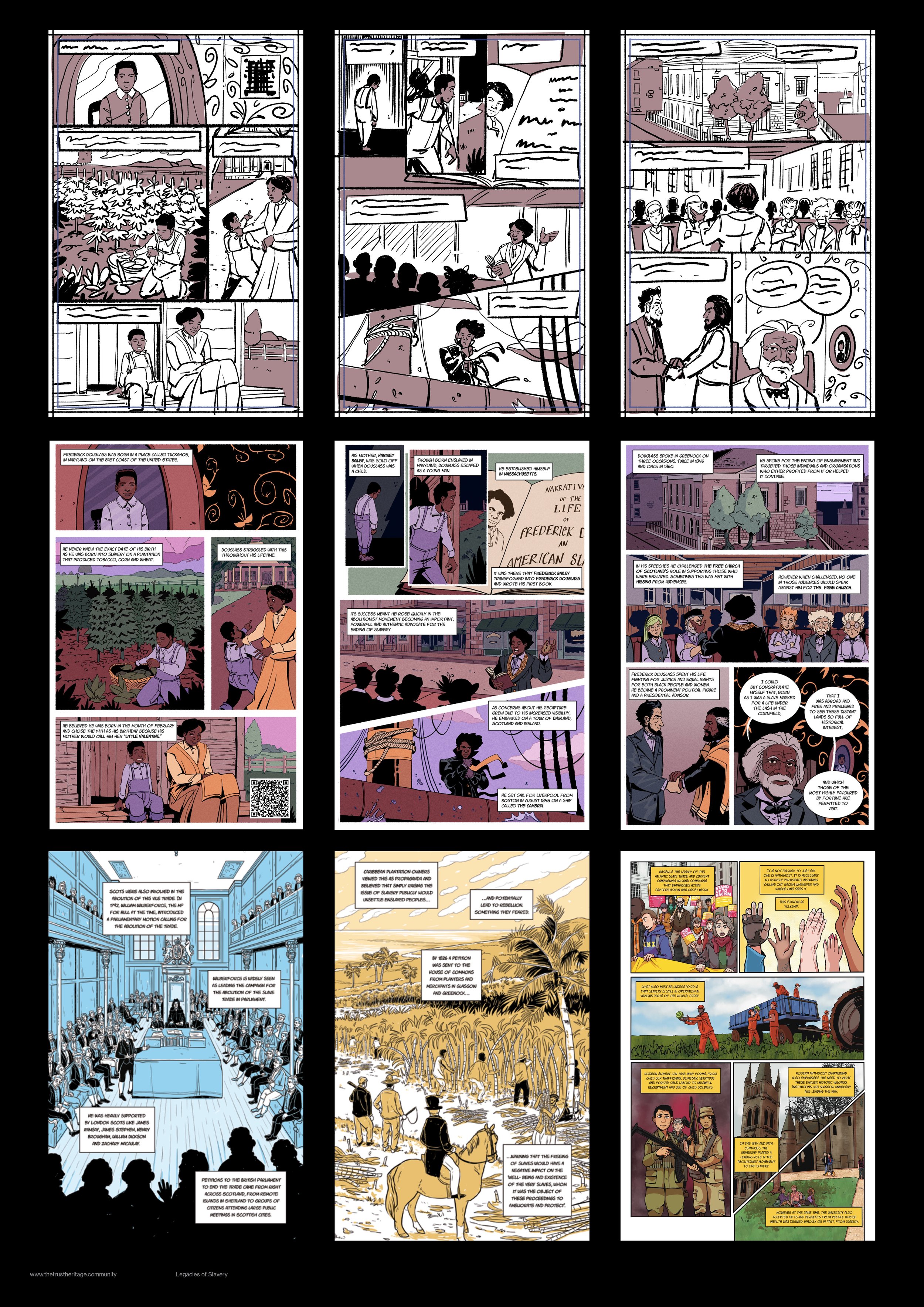
Get a glimpse of the 'Legacies of Slavery' graphic novel, a creative collaboration between Magic Torch Comics and Jideofor (J.I.M) Muotune, in partnership with Proud2Care. The images below present an array of sketches, illustrations, and snippets from the eagerly anticipated graphic novel, scheduled for release in January 2024.
Follow the story of American Abolitionist Frederick Douglass (1818-1895) and explore Inverclyde’s connections to the transatlantic slave trade.
Frederick Douglass was born into chattel slavery as Frederick Augustus Washington Bailey in Maryland, USA (c.1817 or 1818).
A living witness to the horrors of slavery, Douglass told and retold ‘The Story of the Slave’ in impassioned speeches he delivered to audiences in their thousands. In 1845, following the publication of his first autobiography, ‘Narrative of the life of Frederick Douglass, An American Slave’, and fearing for his safety and freedom, Douglass made the decision to embark on a tour of England, Scotland, Wales and Ireland.
Frederick Douglass visited Greenock on at least three separate occasions (twice in 1846 and once in 1860).


Legacies of Slavery Event
-

Graphic Novel Launch
-

Gallery
-

Podcast
-

The Enslaved Lament
“For Douglass, photography was the lifeblood of being able to be seen and not caricatured, to be represented and not grotesque, to be seen as fully human and not as an object or chattel to be bought and sold,”
— Celeste-Marie Bernier, co-author of Picturing Frederick Douglass: An Illustrated Biography of the Nineteenth Century’s Most Photographed American (2015).
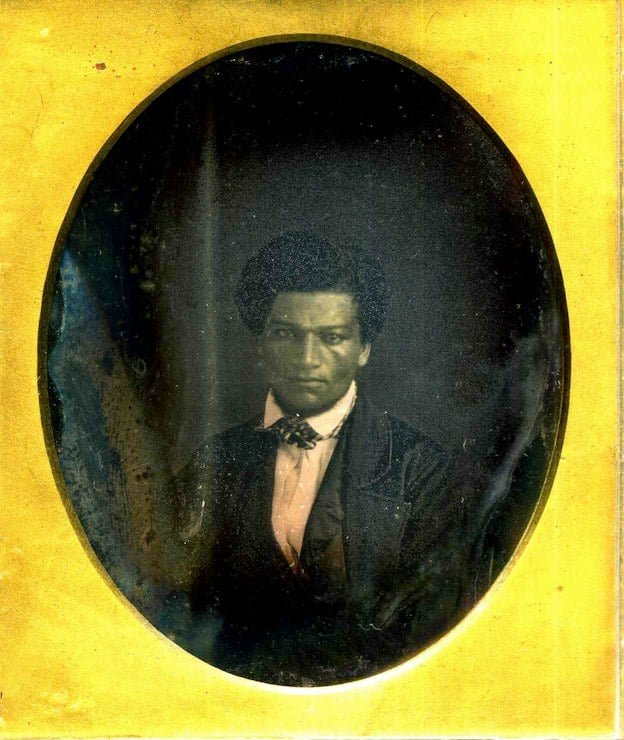
Unknown artist, Frederick Douglass, c. 1841. Sixth-plate daguerreotype. Collection of Greg French
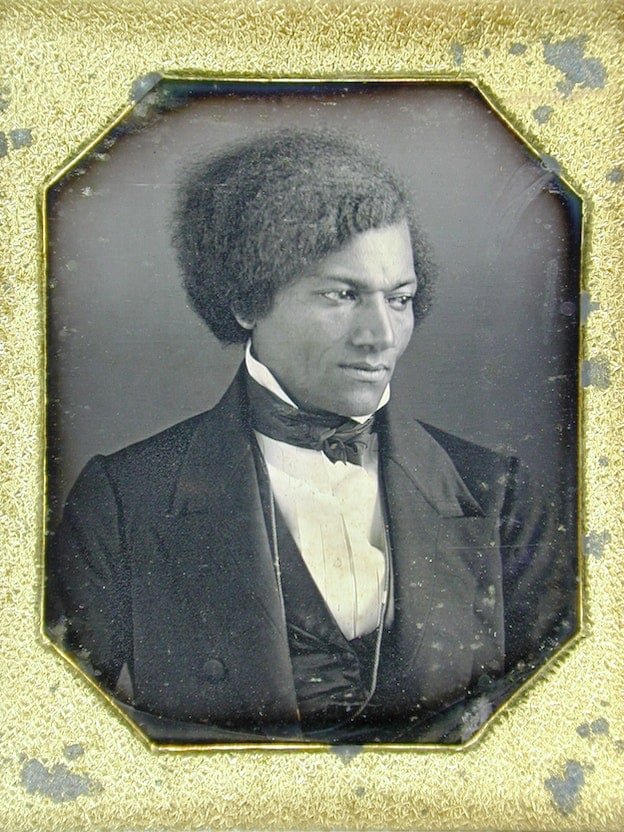
Frederick Douglass, 1848 daguerreotype. Albert Cook Myers Collection, Chester County Historical Society

Frederick Douglass, c. 1847–1852. Artist: Samuel J. Miller. Major Acquisitions Centennial Endowment

Frederick Douglass by an unidentified photographer, circa 1850 (after c. 1847 daguerreotype). National Portrait Gallery, Smithsonian Institution

Frederick Douglass, three-quarter length portrait, seated. 1864. Artist: B.F. Smith & Son. Liljenquist Family collection (Library of Congress)

Frederick Douglass, c. 1877. Brady-Handy photograph collection, Library of Congress, Prints and Photographs Division

Frederick Douglass, c. 1880 Artist: Mathew B. Brady Brady-Handy photograph collection, Library of Congress, Prints and Photographs Division

Frederick Douglass, c. 1880. Artist: Mathew B. Brady Metropolitan Museum of Art. Gilman Collection, Museum Purchase, 2005
-

Archive Materials & Links
Engraving of Port Glasgow with sailing ships & stone quay in foreground, & Town Buildings in background. Titled 'Port Glasgow. W.H.Bartlett. J.W.Appleton
© Courtesy of HES. Illustration in Views in Scotland
-

Events
Legacies of Slavery Graphic Novel Book Launch, The Dutch Gable House Greenock, (September)
Legacies of Slavery Graphic Novel Book Launch & Historic Links to Slavery Heritage Trail (October)
-

Heritage Walks
Coming Soon
-
The project explores Inverclyde’s heritage in relation to the legacies of transatlantic chattel slavery.
-
The Trust has been exploring local social history and its ongoing impact for over 20 years. With this project we are responding to the rise in local and national interest in Scotland’s connections to slavery, and want to support local volunteers to help our community engage with those legacies in Inverclyde
-
The National Lottery Heritage Fund
-
The project will create volunteering opportunities, with local people developing heritage interpretation skills and shaping the way we understand these legacies; through community food heritage workshops and by developing a heritage trail for the community and visitors. The project will also involve care experienced young people developing a storybook on Inverclyde’s legacies of slavery and having a night at the museum, where they can explore the collections for themselves. Finally, we will hold a remembrance event where those involved in the project can showcase what has been learnt. This will include music, food, guided walks, storytelling and more.
-
The Trust will partner with fantastic community organisations including Proud2Care, Magic Torch Comics, Inverclyde Council, Greenock Zero Waste Community Pantry, Thistles and Dandelions, local walking and cycling groups, Inverclyde Voices, and others. We’ll be overseen by a steering group which will include community members and organisations, and the Trust is working with the Coalition for Racial Equality and Rights, BLM in the Stix and the Beniba Centre for Slavery Studies to help us make sure our project promotes racial equality.
-
Yes, to find out more, or if you would like to get involved, please contact Trust Heritage Co-ordinator Niall Ptolomey niall.ptolomey@the-trust.org.uk. You can also follow @trustinverclyde on Twitter, Facebook and Instagram.